Warning Sign · Foundation Movement
Uneven or Sloping Floors — A Foundation Warning
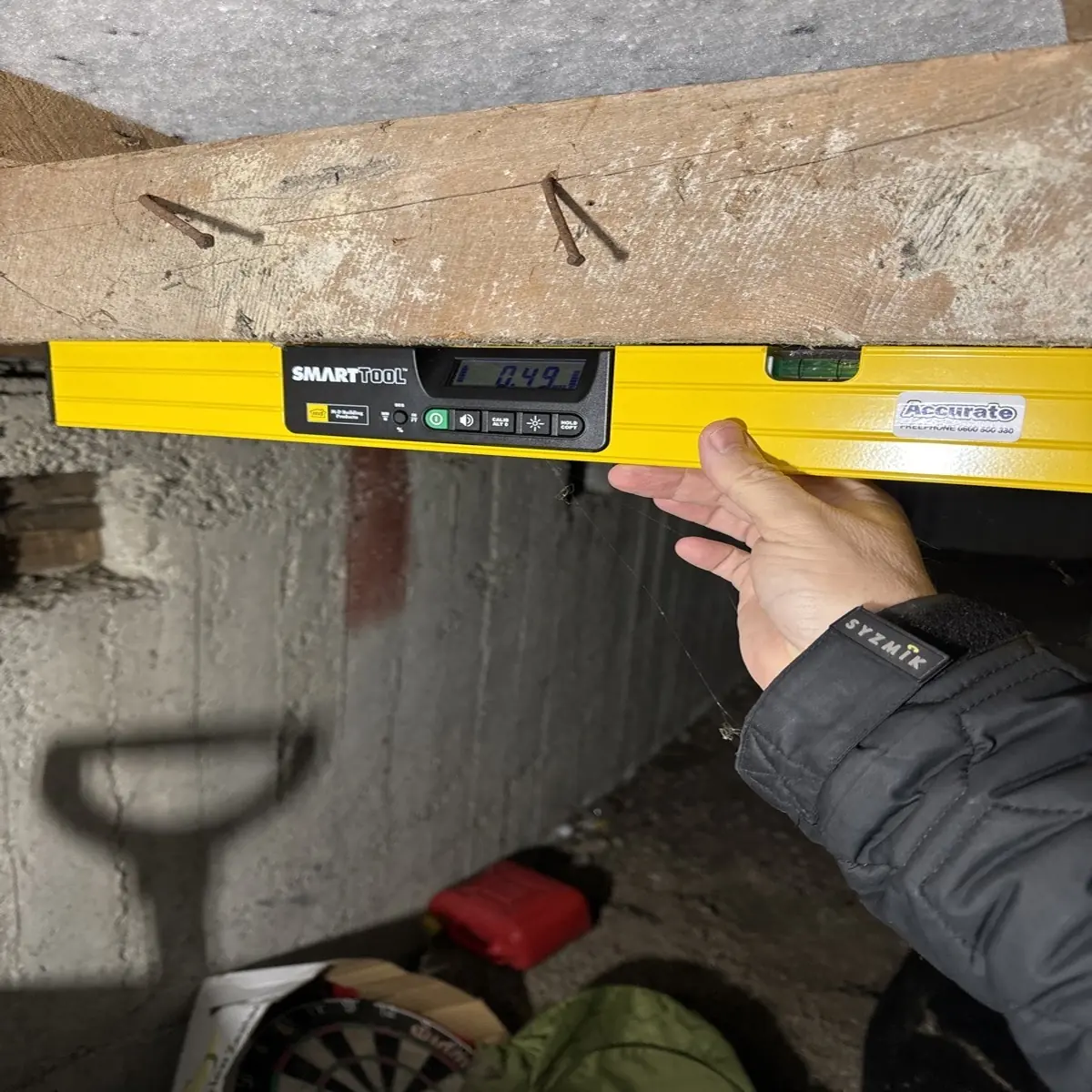
Floors that slope, bounce, or feel uneven underfoot are a sign of ground movement or timber subfloor deterioration — often linked to poor drainage beneath the house.
Floors that slope, bounce, or feel uneven underfoot are a sign of ground movement or timber subfloor deterioration — often linked to poor drainage beneath the house.
A level floor is built on a stable foundation. When the ground beneath moves — due to drainage failure, soil saturation, or subfloor moisture — the foundation moves with it and the floor above reflects that movement.
In Auckland's older homes with timber subfloors, moisture from broken drains or poor drainage creates a second risk: the timber piles, bearers, and joists that support the floor rot and compress under load, causing the floor to sink, bounce, or become uneven.
An uneven floor is a sign that something has already moved. A CCTV drain inspection identifies whether drainage is contributing to the movement — which is the most important question to answer before investing in structural or subfloor repairs.
Learn About CCTV InspectionA leaking drain beneath a suspended floor keeps the subfloor environment permanently damp. This accelerates timber pile and joist decay, causing the floor above to sag or bounce.
Saturated clay beneath concrete slab foundations causes differential settlement — one part of the slab sinks more than another, and the floor surface above becomes uneven.
A broken drain that washes soil away creates voids beneath a concrete slab. The slab then cracks and settles into the void, creating a distinct slope or step change in the floor.
Swelling clay soils push upward when saturated, causing portions of a slab or foundation to lift rather than settle — creating peaks rather than dips.
Large tree roots that have invaded a drain can exert significant pressure on surrounding soil and structures as they grow, causing localised ground movement.
Even a minor ongoing leak accumulates significant effect over years. Gradual ground saturation causes gradual movement that's easily dismissed as normal settling.
A slope of more than 10mm over 3 metres (about 1 in 300) is generally considered worth investigating. But any slope that's new, getting worse, or accompanied by other signs like sticking doors or wall cracking should be assessed sooner.
Always drainage first. Replacing timber piles or relevelling a slab while the underlying drainage problem persists means you're fighting the same moisture source. Fix the drainage, let the ground stabilise, then address the structural consequences.
Yes. Concrete slabs rely on uniform ground support. A broken drain that creates a void beneath the slab, or that saturates and then dries the clay below, causes differential movement that cracks the slab.